
No, no me refiero ni al mítico Empire State neoyorquino, ni al descomunal Burj Khalifa de Dubai.
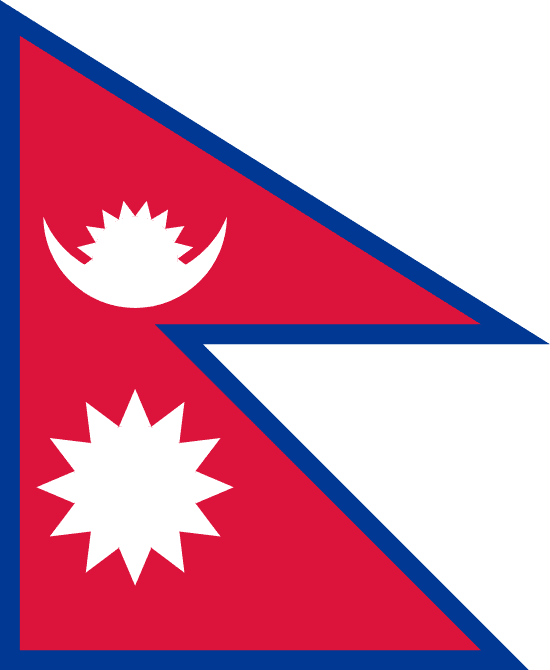
Este país, cuya bandera es la única no rectangular en el mundo -exceptuando la bandera cuadrada de Suiza, contiene 8 de los 14 ochomiles, las montañas más altas del planeta, entre las que se encuentra el Monte Everest. La historia de este país cambio de manera drástica en 2001, cuando uno de los personajes más emblemáticos y queridos por la población nepalí, el Rey Birendra, fue asesinado junto con otros ocho miembros de su familia por su propio hijo y sucesor Dipendra, en una de las intrigas de palacio más enigmáticas de la historia reciente. Dipendra, a pesar del magnicidio y permanecer en coma tras un intento de suicidio, ¡llegó a ser nombrado Rey!. A los tres días, sin embargo, murió, la Monarquía entró en declive y años más tarde el “reino de los cielos” pasó a ser una República.
Bienvenidos a Nepal, ¡Namaste!
 1. El país donde encontrarás las rutas de senderismo con los paisajes más espectaculares del mundo. Te cruzarás o contratarás a los míticos sherpas, que te ayudarán a hacerte el camino más fácil y menos fatigoso. Los sherpas son un grupo étnico budista que habita la región del Everest, creen que la montaña es el hogar de una deidad iluminada. El nombre “sherpa” significa literalmente “gente del este” y no portador de bultos o equipaje, que es en lo que el término ha derivado en la actualidad. Probablemente, el trasiego de montañeros y turistas haya hecho que el atractivo y la singularidad de este territorio haya menguado, pero sigue siendo recomendable darse un paseo por la cordillera del Himalaya. Si las caminatas no son lo tuyo, existen vuelos en avionetas de una hora de duración aproximada donde poder presenciar la grandiosidad de estas montañas.
2. Hay más de 50 festivales que se celebran en Nepal cada año. Mientras que los festivales nacionales tienen fechas fijas , las festividades religiosas se establecen por los astrólogos siguiendo el calendario lunar.
La mejor parte de las festividades en Nepal es que todos los eventos se celebran con el mismo entusiasmo y abundancia con la que se solía celebrar hace cientos de años, cuando la gente no tenía otro medio de entretenimiento. El colorido es la nota más destacada de estos festivales, marcados intensamente por la diversidad de tradiciones religiosas y tribales. La capital, Katmandú cuenta con un surtido de estas diferentes sociedades, adornados siempre con vestidos tradicionales y una comida exótica.


Uno de los festivales más curiosos es el Gai Jatra festival de la vaca, celebrado entre los meses de agosto y septiembre. De acuerdo con la tradición y desde tiempos inmemoriales, cada familia que ha perdido a un familiar durante el último año, tiene que participar en una procesión por las calles de Katmandú liderados por una vaca. Si dicha familia no puede disponer de una vaca, entonces un joven vestido de vaca será considerado como un sustituto válido. En el hinduismo, la vaca es considerado como el más venerado de todos los animales, que además ayudará al familiar fallecido en su viaje tras la muerte.
3. La espiritualidad y el misticismo de los templos, ya sean budistas o hinduistas, no tiene rival. Caben destacar:
- Practicamente todas las ciudades tienen una plaza Durbar en Nepal, pero ninguna comparable con la plaza Durbar de Patan, cinco kilómetros al sur de Katmandú, lleno de templos hindúes y monumentos budistas con las entradas de bronce, deidades como guardianas y esculturas de un gran valor histórico.
- Templo de Pashupatinath, símbolo de la fe, la religión y la tradición hindú, considerado el templo dedicado a Shiva más sagrado en el mundo. Miles de peregrinos de todas partes del mundo vienen a rendir homenaje a este templo que se encuentra a orillas del río Bagmati, donde además se realiza la cremación de los cadáveres Un ritual diseñado para mucho más que deshacerse del cuerpo: liberar al alma de su existencia terrenal y continuación del ciclo de la reencarnación.
- Tras subir 365 escalones, encontramos la estupa de Swayambhunath, comúnmente conocido como el templo de los monos por sus inquilinos. Al alcanzar el último escalón, nos toparemos de frente con los ojos de Buda, mirando en cada dirección, un par en cada lateral, representando la omnipresencia de Buda. Los ojos de Buda son tan frecuentes en todo el país que se han convertido en un símbolo de Nepal en sí mismo. Entre los ojos del Buda, donde se encontraría la nariz, aparece un símbolo en forma de espiral, parecido al signo de interrogación, este es el carácter para el número 1 en Nepal, símbolo de unidad de todas las cosas, así como el único camino para alcanzar la iluminación a través de las enseñanzas del Buda. Por encima de este se encuentra el tercer ojo , símbolo de la sabiduría de Buda que todo lo ve. Recuerda que para ser respetuoso con las costumbres budistas, los templos, stupas o otros lugares de interés, han de ser rodeados en el sentido de las agujas del reloj, es decir, tienen que quedar a mano derecha.
- Si pulsáis sobre cada uno de los nombres podréis presenciar, vía vídeo, el esplendor de estos lugares-

Nepal tiene muchos atractivos, pero lo que verdaderamente destaca de su país es la amabilidad de sus habitantes y la impagable sonrisa en cada una de sus caras. Yo volveré a Nepal, porque como dice la campaña promocional nepalí, “Nepal, Once is not enough“. ¿Os apuntáis?
English version
Nepal: On top of the world.
No, I am not talking about the legendary Empire State of New York, or the colossal Burj Khalifa in Dubai.
This country, whose flag is the only non-rectangular in the world if we don't count the squared flag of Switzerland, contains 8 of the 14 eight-thousanders, the planet's highest mountains, among which we can find the Mount Everest with its 8.848 meters. The history of this country changed dramatically in 2001, when one of the most iconic and beloved kings in Nepal, King Birendra, was killed together with eight other members of his family by his son and successor Dipendra, in one of the most enigmatic palace intrigues in recent history. Dipendra, despite the assassination and remaining in a coma after a suicide attempt, became acknowledged King! After three days, however, he passed away, the monarchy was in decline and years later the "Kingdom of Heaven" became a Republic.
Welcome to Nepal, Namaste!
1. The country where you'll find the most spectacular hiking trails of the world. You will be assisted by the mythical Sherpas that will make your way up much easier and less tiring. The Sherpas are a Buddhist ethnic group living in the Everest region. They believe that the mountain is home to an enlightened deity. The name "Sherpa" literally means "people from the east" and not packages or luggage carriers, which is what the term Sherpa has led into today. Probably, the passing of mountaineers and tourists has diminished the attractiveness and uniqueness of this territory, but it is still advisable to take a stroll through the Himalayas. If hiking is not your thing, there are charter flights tours which take approximately one hour from where you can witness the grandeur of these mountains.
2. There are more than 50 festivals celebrated in Nepal all year around. While the national festivals have fixed dates, religious festivals are set by astrologers following the lunar calendar and consequently celebrated in different dates.
The best part of these holidays in Nepal is that all events are celebrated with the same enthusiasm and abundance as some hundred years ago when people had no other means of entertainment. The coloring is the most prominent and important feature of these festivals, strongly marked by the diversity of religious and tribal traditions. The capital, Kathmandu has an assortment of all of these different societies, always adorned with traditional dresses and exotic food.
One of the most unusual festivals is the Gai Jatra cow festival, held between the months of August and September. According to the tradition and from time immemorial, every family who has lost a relative during the past year must participate in a procession through the streets of Kathmandu lead by a cow. If this family can not have a cow, then a young guy dressed like a cow will be considered as a valid substitute. In Hinduism, the cow is considered the most revered of all animals, they also help dead people on their journey after death.
3. The spirituality and mysticism of the temples, whether Buddhist or Hindu, is unrivaled. Be highlighted:
- Almost all cities have a Durbar Square in Nepal, but none comparable to Patan Durbar Square, five kilometers south of Katmandu, full of Hindu temples and Buddhist monuments with bronze doors, having deities as guardians and sculptures of great historical value.
- Pashupatinath Temple, symbol of faith, religion and Hindu tradition, is considered the holiest temple dedicated to Shiva in the world. Thousands of pilgrims from all over the world come to pay homage to this temple that is located on the banks of the Bagmati River, the place where most cremation in Nepal are performed. A ritual designed for much more than getting rid of the body: free the soul of his earthly existence and as a continuation of the reincarnation cycle.
- After climbing 365 steps, we can find the Swayambhunath Stupa, commonly known as the Monkey Temple because of its tenants. Upon reaching the last steps, we will come across Buddha's eyes, looking in each direction, a pair on each side, personifying his omnipresence. Buddha's eyes are so prevalent throughout the country that they have become a symbol of Nepal itself. Between the Buddha's eyes, in the place where the nose would be found, a symbol appears with a spiral shape, similar to a question mark sign, this is the character for the number 1 in Nepal, symbol of unity of all things, and the only way to attain enlightenment through Buddha's doctrine. Above this symbol, the third eye, symbol of the Buddha's wisdom that sees everything. Remember to be respectful with the Buddhist temples customs, stupas and other places of interest are to be surrounded clockwise, that means they should always remain on your right handside.
- If you click on each of the names you can witness via video, the splendor of these places-
Nepal has many attractions, but what really stands out for his country is the friendliness of its people and the priceless smile on each of their faces. I will return to Nepal, because as the Nepalese promotional campaign says, "Nepal, Once is not enough". Will you join me?
Fascinante tu blog Oscar, y en especial esta entrada dedicada a Nepal. Sigue asi amigo, enseñandonos el mundo.
ReplyDeleteMuchas gracias Luismi y feliz 2014. Se aprecian tus palabras. Ojalá pueda seguir con este ritmo de viajes :)
ReplyDelete